
The short version
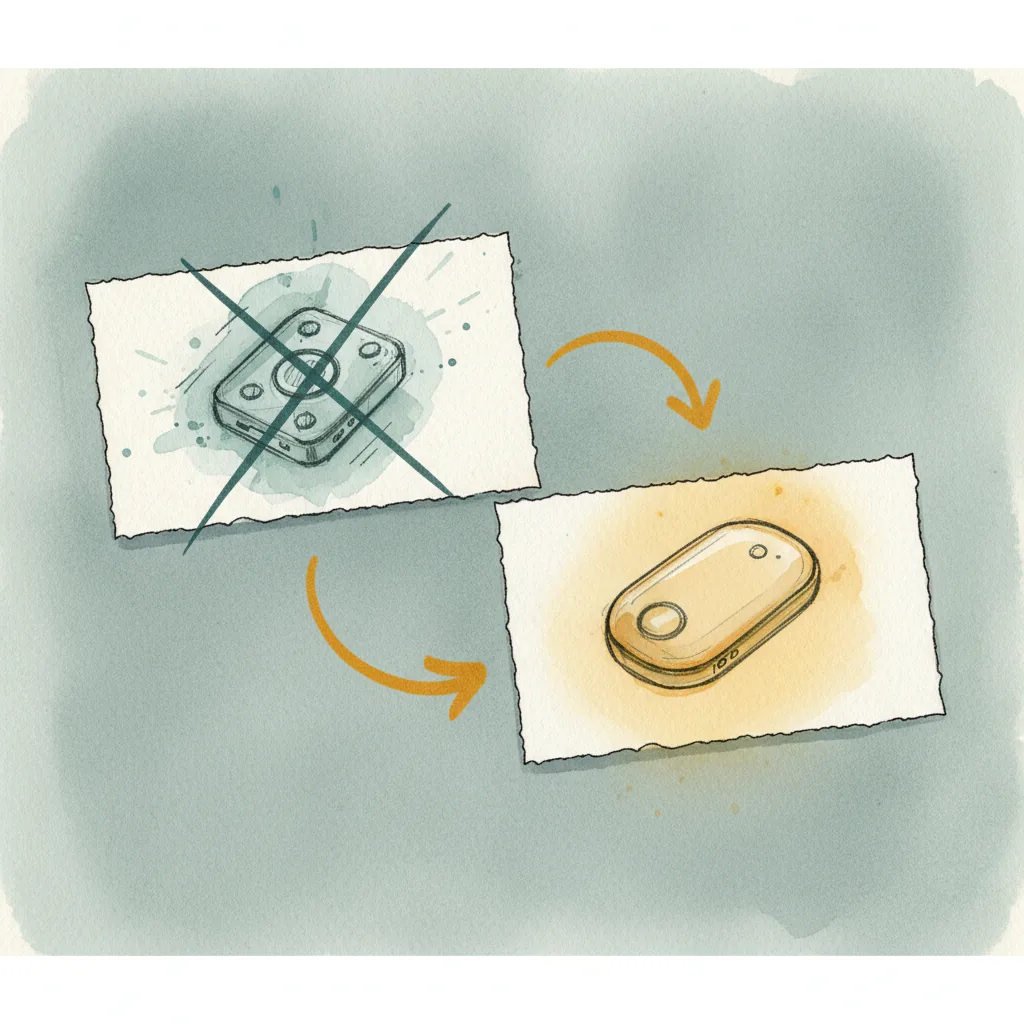
Successful companies are constantly pivoting. Pivoting isn’t a failure, it’s core to how good companies find their market. The research says the healthy version is evidence-driven and usually partial: you change the one variable your experiments proved wrong, often the customer or the wedge, and keep what’s working. The real danger isn’t pivoting too much. It’s inertia, riding a wrong assumption straight into the wall because no one on the team will call it. The signal to watch isn’t a single bad month. It’s a pattern of your core assumptions failing the same way.
“Know when to pivot” is the kind of useless advice we hear all the time. It sounds simple, but it lacks any real clarity. Pivot too early, and are you quitting before the idea ever got a fair shot? Pivot too late, and are you just being stubborn, ignoring the market and the advisors telling you the truth? I’ve watched founders fall into both. So let’s dive in.
What the research points to
Start here: successful companies are constantly pivoting. Look closely at almost any brand you admire and you’ll find a trail of experiments, in the product, the positioning, what they sell and how they sell it. Pivoting isn’t the mistake. It’s core to how good companies find their market.
- Pivots are common among the winners, and they can be small or large.1, 4 The good ones usually change one variable, the customer, the framing, the wedge, while keeping the insight the team has already earned.1 Wholesale resets are rarer and riskier.
- The real danger is inertia, not pivoting. Keep driving in the wrong direction and you will, for sure, slam into a wall. Knowing something isn’t working is the whole prerequisite for changing course. And here’s the catch: usually the team already knows. The founder already knows. But only great teams have the internal honesty, and the healthy conflict, to say it out loud and call it what it is.3
- Constantly test your assumptions. Starting a company bakes in a stack of assumptions, about the direction, the go-to-market, the execution, the pricing, and a dozen other things. Every week you’re testing them and learning which hold and which don’t. When one turns out to be false, that’s your cue. Use it. The data is clear that these evidence-based pivots significantly outperform reactionary ones off a bad week or a competitor’s launch.2
If you’re sailing and you hit something, you don’t just keep going. You take inventory. You figure out which way to head next. Maybe it’s a small correction, maybe it’s a hard turn, but either way it’s an adjustment. The fact that you were pointed the wrong way in the first place is a sunk cost. It doesn’t matter anymore. The only thing that matters is what you do next.
A usable test
Before you pivot, write down the specific assumptions that failed and how you know. If you can name a repeated, evidence-backed failure of a core assumption, customers don’t actually have the pain, or you can’t reach them affordably, that’s a real signal. If what you’ve got is discouragement and a shiny new idea, that’s noise. The strongest founders we see treat the pivot like any other experiment: hypothesis, evidence, call.2
And some of the best pivots never feel like pivots at all. Great companies get pulled into their markets. A small experiment, a usage pattern, a side feature nobody prioritized suddenly catches on, with the dev team, with a customer, with a corner of the market you weren’t even aiming at. In the moment it just feels like the experimentation you wanted. That pull is the real signal. Don’t treat a pivot as a negative. Treat it as an extension of the same learning that got you this far.
References
- Rachitsky, L. (2024). The Art of the Pivot, Part 1: The Definitive List of Successful Pivots. Lenny’s Newsletter, with a companion dataset of 33+ dissected pivots. About 1 in 3 B2B startups pivots before its big idea, and successful pivots usually keep a working piece and change one thing. lennysnewsletter.com
- Camuffo, A., Cordova, A., Gambardella, A., & Spina, C. (2020). A Scientific Approach to Entrepreneurial Decision Making. Management Science 66(2), 564-586 (large-scale replication in Strategic Management Journal, 2024). Founders trained to test assumptions like scientists kill bad ideas faster and run a few well-chosen pivots rather than none or many. Open PDF · INFORMS · 2024 replication
- CB Insights (2021). The Top Reasons Startups Fail. Analysis of startup post-mortems. Running out of cash and no market need are among the most common failure modes, the trap founders hit when they stay on a dead path too long. cbinsights.com
- Tamaseb, A. (2021). Super Founders: What Data Reveals About Billion-Dollar Startups. PublicAffairs. Many billion-dollar startups pivoted before their winning idea, so pivoting is common rather than a mark of failure. superfoundersbook.com
Full source library for this brief: the Research Library.
Pass it to a founder friend — or pitch us.
If this hit home, share it with someone building. And if you're the one building at the intersection of AI and exceptional UX, we'd love to hear about it.